
Online Database of Chemicals from Around the World
| Zhejiang Esun Chemical Co., Ltd. | China | |||
|---|---|---|---|---|
 | www.esunchem.com | |||
 | +86 (571) 5628-6531 | |||
 | +86 (571) 5628-7608 | |||
 | esunchem@gmail.com | |||
| Chemical manufacturer | ||||
| chemBlink Standard supplier since 2007 | ||||
| Asia Talent Chemical Limited | China | |||
|---|---|---|---|---|
| www.atchem.net | |||
| +86 (755) 8665-5561 | |||
| +86 (755) 8665-5591 | |||
| jeffreyxu@atchem.net sinochemxu@hotmail.com asiatalentchem@gmail.com | |||
 | QQ Chat | |||
 | Skype Chat | |||
| Chemical manufacturer | ||||
| chemBlink Standard supplier since 2007 | ||||
| ZHIYU Biotechnology Co., Ltd. | China | |||
|---|---|---|---|---|
| www.zhiyubiotech.com | |||
| +86 (512) 6279-1916 | |||
| +86 (512) 6279-1915 | |||
| sales@zhiyubiotech.com info@zhiyubiotech.com | |||
| QQ Chat | |||
| Chemical manufacturer since 2008 | ||||
| chemBlink Standard supplier since 2009 | ||||
| Hefei TNJ Chemical Industry Co., Ltd. | China | |||
|---|---|---|---|---|
| www.tnjchem.com | |||
| +86 (551) 6541-8684 | |||
| +86 (551) 6541-8697 | |||
| sales@tnjchem.com | |||
| Chemical manufacturer since 2001 | ||||
| chemBlink Standard supplier since 2010 | ||||
| Nanjing Qihui Pharmtehc Co., Ltd. | China | |||
|---|---|---|---|---|
| www.qhpharm.com | |||
| +86 (25) 5855-7899 | |||
| +86 (25) 5855-7899 | |||
| sales@qhpharm.com | |||
| Chemical manufacturer | ||||
| chemBlink Standard supplier since 2010 | ||||
| BOC Sciences | USA | |||
|---|---|---|---|---|
| www.bocsci.com | |||
| +1 (631) 485-4226 | |||
| +1 (631) 614-7828 | |||
| info@bocsci.com | |||
| Chemical manufacturer | ||||
| chemBlink Standard supplier since 2010 | ||||
| Suzhou Chemwe, Inc. | China | |||
|---|---|---|---|---|
| www.chemwe.com | |||
| +86 (512) 6270-6911 +86 13812802656 | |||
| +86 (512) 6270-6910 | |||
| sales@chemwe.com | |||
| QQ Chat | |||
| Chemical manufacturer since 2007 | ||||
| chemBlink Standard supplier since 2012 | ||||
| Selleck Chemicals LLC | USA | |||
|---|---|---|---|---|
| www.selleckchem.com | |||
| +1 (713) 535-9129 | |||
| +1 (832) 582-8590 | |||
| info@selleckchem.com | |||
| Chemical manufacturer | ||||
| chemBlink Standard supplier since 2014 | ||||
| Qingdao Xinnuo Pharmaceutical Chemical Co., Ltd. | China | |||
|---|---|---|---|---|
| www.xinnuopharma.com | |||
| +86 (531) 6656-1050 +86 18615688656 +86 18653156686 | |||
| +86 (531) 6656-1050 | |||
| sales@xinnuopharma.com | |||
| QQ Chat | |||
| Skype Chat | |||
| Chemical manufacturer since 2013 | ||||
| chemBlink Standard supplier since 2014 | ||||
| Jinan Aery Pharmaceutical Co., Ltd. | China | |||
|---|---|---|---|---|
| www.aerpharm.com | |||
| +86 (531) 8126-3406 +86 15553134202 | |||
| +86 (531) 5859-1634 | |||
| sales@aerpharm.com | |||
| QQ Chat | |||
| Skype Chat | |||
| Chemical manufacturer since 2006 | ||||
| chemBlink Standard supplier since 2014 | ||||
| Hangzhou Leap Chem Co., Ltd. | China | |||
|---|---|---|---|---|
| www.leapchem.com | |||
| +86 (571) 8771-1850 | |||
| market19@leapchem.com | |||
| QQ Chat | |||
| Chemical manufacturer since 2006 | ||||
| chemBlink Standard supplier since 2015 | ||||
| Renheng Pharm Limited | China | |||
|---|---|---|---|---|
| www.renheng.com.cn | |||
| +86 (20) 3998-1653 | |||
| +86 (20) 3998-1158 | |||
| sales@renheng.com.cn | |||
| Chemical manufacturer since 2013 | ||||
| chemBlink Standard supplier since 2015 | ||||
| Amadis Chemical Co., Ltd. | China | |||
|---|---|---|---|---|
| www.amadischem.com | |||
| +86 (571) 8992-5085 | |||
| +86 (571) 8992-5065 | |||
| sales@amadischem.com | |||
| Chemical manufacturer since 2010 | ||||
| chemBlink Standard supplier since 2015 | ||||
| Sphinx Scientific Laboratory (Tianjin) Co., Ltd. | China | |||
|---|---|---|---|---|
| www.sphinxpharm.com | |||
| +86 (22) 6621-1289 ex 818 | |||
| +86 (22) 6621-1370 | |||
| lilh@sphinxpharm.com | |||
| QQ Chat | |||
| Chemical manufacturer since 2009 | ||||
| chemBlink Standard supplier since 2017 | ||||
| BeLang Pharma Co., Ltd. | China | |||
|---|---|---|---|---|
| www.belangpharma.com | |||
| +86 13885682355 | |||
| info@belangpharma.com | |||
| QQ Chat | |||
| Chemical manufacturer since 2019 | ||||
| chemBlink Standard supplier since 2019 | ||||
| Neostar United (Changzhou) Industrial Co., Ltd. | China | |||
|---|---|---|---|---|
| www.neostarunited.com | |||
| +86 (519) 8555-7386 +86 18015025600 | |||
| +86 (519) 8555-7389 | |||
| marketing1@neostarunited.com | |||
| Chemical distributor since 2014 | ||||
| chemBlink Standard supplier since 2020 | ||||
| Lengshi Chemical (Qingzhou) Co., Ltd. | China | |||
|---|---|---|---|---|
| www.xinnuopharma.cn | |||
| +86 18615688656 | |||
| sales@xinnuopharma.com | |||
 | WeChat: 18615688656 | |||
| Chemical distributor since 2024 | ||||
| chemBlink Standard supplier since 2026 | ||||
| Sinbond Industrial Co., Ltd. | China | |||
|---|---|---|---|---|
| www.sinbondpharm.com | |||
| +86 (531) 8703-8285 +86 13583181986 +44 (208) 242-5518 | |||
| +86 (531) 8703-8285 | |||
| cici1124@gmail.com | |||
| QQ Chat | |||
| Chemical manufacturer since 2014 | ||||
| Santa Cruz Biotechnology, Inc. | USA | |||
|---|---|---|---|---|
| www.scbt.com | |||
| +1 (831) 457-3800 | |||
| +1 (831) 457-3801 | |||
| scbt@scbt.com | |||
| Chemical manufacturer | ||||
| Acanthus Research | USA | |||
|---|---|---|---|---|
| www.acanthusresearch.com | |||
| +1 (416) 978-4344 | |||
| +1 (905) 566-9541 | |||
| inquiries@acanthusresearch.com | |||
| Chemical manufacturer | ||||
| Classification | Biochemical >> Inhibitor >> Neuronal signaling >> COX inhibitor |
|---|---|
| Name | Nepafenac |
| Synonyms | 2-Amino-3-benzoylbenzeneacetamide |
| Molecular Structure | 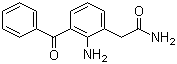 |
| Molecular Formula | C15H14N2O2 |
| Molecular Weight | 254.28 |
| CAS Registry Number | 78281-72-8 |
| EC Number | 682-241-7 |
| SMILES | C1=CC=C(C=C1)C(=O)C2=CC=CC(=C2N)CC(=O)N |
| Density | 1.3±0.1 g/cm3 Calc.* |
|---|---|
| Boiling point | 562.5±50.0 °C 760 mmHg (Calc.)* |
| Flash point | 294.0±30.1 °C (Calc.)* |
| Solubility | DMSO: 32 mg/mL (Expl.) |
| Index of refraction | 1.641 (Calc.)* |
| * | Calculated using Advanced Chemistry Development (ACD/Labs) Software. |
| Hazard Symbols |  GHS09 Warning Details GHS09 Warning Details | ||||||||||||||||||||||||||||||||
|---|---|---|---|---|---|---|---|---|---|---|---|---|---|---|---|---|---|---|---|---|---|---|---|---|---|---|---|---|---|---|---|---|---|
| Risk Statements | H400 Details | ||||||||||||||||||||||||||||||||
| Safety Statements | P273-P391-P501 Details | ||||||||||||||||||||||||||||||||
| Hazard Classification | |||||||||||||||||||||||||||||||||
| |||||||||||||||||||||||||||||||||
| SDS | Available | ||||||||||||||||||||||||||||||||
 chemBlink Chemical Story
|
Nepafenac is a nonsteroidal anti-inflammatory drug (NSAID) designed for ophthalmic use, primarily to reduce pain and inflammation associated with cataract surgery and other ocular procedures. It is chemically distinct among NSAIDs because it functions as a prodrug that is activated within ocular tissues. NSAIDs act by inhibiting cyclooxygenase (COX) enzymes, which are responsible for converting arachidonic acid into prostaglandins. Prostaglandins are key mediators of inflammation, pain, and fever. By reducing prostaglandin synthesis, NSAIDs alleviate inflammatory responses. Nepafenac follows this general mechanism but differs in that it is administered in an inactive form that undergoes biotransformation in the eye. Nepafenac is a neutral amide prodrug that efficiently penetrates the cornea due to its relatively lipophilic and non-ionized structure. After topical administration, it diffuses through ocular tissues and is converted by intraocular hydrolases into its active metabolite, amfenac. Amfenac is the pharmacologically active NSAID that inhibits COX enzymes, particularly COX-2, thereby reducing prostaglandin production in ocular tissues. The prodrug design of nepafenac is important because direct administration of polar NSAIDs often results in poor corneal penetration. By masking the acidic functionality in a neutral amide form, nepafenac achieves enhanced ocular bioavailability. Once inside the eye, enzymatic hydrolysis restores the active acidic NSAID form at the site of action. Structurally, nepafenac contains an aromatic system with a nitrogen-containing heterocycle-like amide linkage, along with hydrophobic aromatic substituents. These features contribute to its lipophilicity, enabling efficient transport across lipid-rich biological membranes such as the corneal epithelium. The active metabolite, amfenac, contains a free carboxylic acid group that is essential for cyclooxygenase inhibition. Like other arylacetic acid NSAIDs, amfenac binds to the COX active site and blocks access of arachidonic acid, thereby suppressing prostaglandin synthesis. This inhibition reduces ocular inflammation, pain, and postoperative discomfort. Clinically, nepafenac is used as an ophthalmic suspension or solution, often administered prior to and following cataract surgery. It helps prevent and treat postoperative inflammation and may also reduce the risk of cystoid macular edema, a complication involving fluid accumulation in the retina. Compared with other ophthalmic NSAIDs such as ketorolac or bromfenac, nepafenac’s prodrug strategy provides enhanced corneal penetration and sustained intraocular activity. This makes it particularly effective in achieving therapeutic concentrations within deeper ocular tissues. From a pharmacokinetic perspective, nepafenac is rapidly absorbed through the cornea and converted to amfenac in the iris-ciliary body and retina. The localized activation minimizes systemic exposure and reduces the risk of systemic NSAID-related side effects. Structurally related NSAIDs and prostaglandin analogs such as misoprostol and latanoprost acid highlight the broader therapeutic importance of modulating prostaglandin pathways in ophthalmology, either by inhibiting their synthesis or mimicking their activity. Overall, nepafenac is an ophthalmic NSAID prodrug that is converted to amfenac in ocular tissues, where it inhibits cyclooxygenase enzymes and reduces prostaglandin-mediated inflammation. Its significance lies in its enhanced ocular penetration, targeted activation, and effectiveness in managing postoperative eye inflammation. References 2026. Thermal load management in photorefractive keratectomy: a comprehensive review of cooling strategies. Graefe's archive for clinical and experimental ophthalmology = Albrecht von Graefes Archiv fur klinische und experimentelle Ophthalmologie. DOI: 10.1007/s00417-025-07114-y 2026. Management of Ocular Diseases Using Nanocrystal-based Formulations. Nanocrystals. DOI: 10.1007/978-3-032-10238-6_9 |
| Market Analysis Reports |